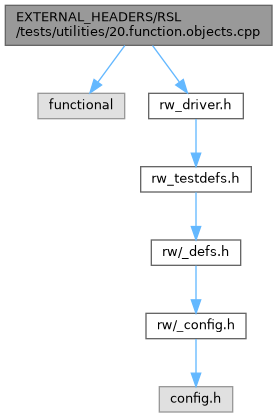
Go to the source code of this file.
Data Structures | |
| struct | has_implicit_ctor |
| struct | Integer |
| struct | has_implicit_ctor_from_member |
Macros | |
| #define | TEST_CLASS_DEF(name, Tparam) |
| #define | TEST_CLASS_DEF_2(name, Tparam1, Tparam2) |
| #define | TEST_CLASS_DEF_3(name, Tparam1, Tparam2, Tparam3) |
| #define | TEST_FUNCTION_DEF(decl) template decl |
| #define | TEST_UNARY_OP(fun, op, x) |
| #define | TEST_BINARY_OP(fun, op, x, y) |
| #define | N std |
| #define | UNARY_OP_ARG_LIST(fun) (const fun::argument_type&) |
| #define | BINARY_OP_ARG_LIST(fun) (const fun::first_argument_type&, const fun::second_argument_type&) |
| #define | CTOR_ARG_LIST |
| #define | N _RW |
| #define | N std |
| #define | CTOR_ARG_LIST = std::unary_negate<std::logical_not<int> > (std::logical_not<int> ()) |
| #define | CTOR_ARG_LIST = std::not1 (std::logical_not<char> ()) |
| #define | CTOR_ARG_LIST = std::binary_negate<std::equal_to<double> > (std::equal_to<double> ()) |
| #define | CTOR_ARG_LIST = std::binary_negate<std::not_equal_to<int> > (std::not_equal_to<int> ()) |
| #define | CTOR_ARG_LIST = std::not2 (std::equal_to<int> ()) |
| #define | CTOR_ARG_LIST (std::minus<int>(), 1) |
| #define | CTOR_ARG_LIST = std::bind1st (std::divides<int>(), 6) |
| #define | CTOR_ARG_LIST = std::bind2nd (std::plus<int>(), -2) |
| #define | CTOR_ARG_LIST (&::square) |
| #define | UNARY_OP_ARG_LIST(fun) (fun::argument_type) |
| #define | pointer_to_unary_function_int pointer_to_unary_function<int, int> |
| #define | CTOR_ARG_LIST = std::ptr_fun (&::square) |
| #define | CTOR_ARG_LIST (&::shift) |
| #define | BINARY_OP_ARG_LIST(fun) (fun::first_argument_type, fun::second_argument_type) |
| #define | pointer_to_binary_function_int pointer_to_binary_function<int, int, int> |
| #define | CTOR_ARG_LIST = std::ptr_fun (&::shift) |
| #define | CTOR_ARG_LIST (&Integer::square) |
| #define | mem_fun_t_Integer_int mem_fun_t<int, Integer> |
| #define | CTOR_ARG_LIST = std::mem_fun (&Integer::square) |
| #define | CTOR_ARG_LIST (&Integer::div) |
| #define | mem_fun1_t_int_Integer_short mem_fun1_t<int, Integer, short> |
| #define | CTOR_ARG_LIST = std::mem_fun (&Integer::div) |
| #define | CTOR_ARG_LIST (&Integer::square) |
| #define | UNARY_OP_ARG_LIST(fun) (fun::argument_type&) |
| #define | mem_fun_ref_t_Integer_int mem_fun_ref_t<int, Integer> |
| #define | CTOR_ARG_LIST = std::mem_fun_ref (&Integer::square) |
| #define | CTOR_ARG_LIST (&Integer::div) |
| #define | BINARY_OP_ARG_LIST(fun) (fun::first_argument_type&, fun::second_argument_type) |
| #define | mem_fun1_ref_t_int_Integer_short mem_fun1_ref_t<int, Integer, short> |
| #define | CTOR_ARG_LIST = std::mem_fun_ref (&Integer::div) |
| #define | CTOR_ARG_LIST (&Integer::const_square) |
| #define | UNARY_OP_ARG_LIST(fun) (fun::argument_type) |
| #define | const_mem_fun_t_Integer_int const_mem_fun_t<int, Integer> |
| #define | CTOR_ARG_LIST = std::mem_fun (&Integer::const_square) |
| #define | CTOR_ARG_LIST (&Integer::const_div) |
| #define | BINARY_OP_ARG_LIST(fun) (fun::first_argument_type, fun::second_argument_type) |
| #define | const_mem_fun1_t_int_Integer_short const_mem_fun1_t<int, Integer, short> |
| #define | CTOR_ARG_LIST = std::mem_fun (&Integer::const_div) |
| #define | CTOR_ARG_LIST (&Integer::const_square) |
| #define | UNARY_OP_ARG_LIST(fun) (const fun::argument_type&) |
| #define | const_mem_fun_ref_t_Integer_int const_mem_fun_ref_t<int, Integer> |
| #define | CTOR_ARG_LIST = std::mem_fun_ref (&Integer::const_square) |
| #define | CTOR_ARG_LIST (&Integer::const_div) |
| #define | BINARY_OP_ARG_LIST(fun) (const fun::first_argument_type&, fun::second_argument_type) |
| #define | const_mem_fun1_ref_t_int_Integer_short const_mem_fun1_ref_t<int, Integer, short> |
| #define | CTOR_ARG_LIST = std::mem_fun_ref (&Integer::const_div) |
Functions | |
| TEST_CLASS_DEF_2 (unary_function,< int, int >) | |
| TEST_CLASS_DEF_3 (binary_function,< int, int, int >) | |
| TEST_CLASS_DEF (plus,< int >) | |
| TEST_CLASS_DEF (minus,< int >) | |
| TEST_CLASS_DEF (multiplies,< int >) | |
| TEST_CLASS_DEF (divides,< int >) | |
| TEST_CLASS_DEF (modulus,< int >) | |
| TEST_CLASS_DEF (negate,< int >) | |
| TEST_CLASS_DEF (equal_to,< int >) | |
| TEST_CLASS_DEF (not_equal_to,< int >) | |
| TEST_CLASS_DEF (greater,< int >) | |
| TEST_CLASS_DEF (less,< int >) | |
| TEST_CLASS_DEF (greater_equal,< int >) | |
| TEST_CLASS_DEF (less_equal,< int >) | |
| TEST_CLASS_DEF (logical_and,< int >) | |
| TEST_CLASS_DEF (logical_or,< int >) | |
| TEST_CLASS_DEF (logical_not,< int >) | |
| TEST_CLASS_DEF (unary_negate,< std::negate< int > >) | |
| TEST_FUNCTION_DEF (std::unary_negate< std::negate< int > > std::not1(const std::negate< int > &)) | |
| TEST_CLASS_DEF (binary_negate,< std::equal_to< int > >) | |
| TEST_FUNCTION_DEF (std::binary_negate< std::equal_to< int > > std::not2(const std::equal_to< int > &)) | |
| TEST_CLASS_DEF (binder1st,< std::plus< int > >) | |
| TEST_FUNCTION_DEF (std::binder1st< std::plus< int > > std::bind1st(const std::plus< int > &, const int &)) | |
| TEST_CLASS_DEF (binder2nd,< std::plus< int > >) | |
| TEST_FUNCTION_DEF (std::binder2nd< std::plus< int > > std::bind2nd(const std::plus< int > &, const int &)) | |
| void | is_explicit (const std::unary_negate< std::logical_not< int > > &) |
| void | is_explicit (const std::binary_negate< std::equal_to< int > > &) |
| void | is_explicit (const std::pointer_to_unary_function< int, int > &) |
| void | is_explicit (const std::pointer_to_binary_function< int, int, int > &) |
| void | is_explicit (const has_implicit_ctor &) |
| int | square (int i) |
| int | shift (int i, int n) |
| void | is_explicit (const std::mem_fun_t< int, Integer > &) |
| void | is_explicit (const has_implicit_ctor_from_member &) |
| int | main (int argc, char *argv[]) |
Macro Definition Documentation
◆ BINARY_OP_ARG_LIST [1/5]
| #define BINARY_OP_ARG_LIST | ( | fun | ) | (const fun::first_argument_type&, const fun::second_argument_type&) |
Definition at line 265 of file 20.function.objects.cpp.
◆ BINARY_OP_ARG_LIST [2/5]
| #define BINARY_OP_ARG_LIST | ( | fun | ) | (fun::first_argument_type, fun::second_argument_type) |
Definition at line 265 of file 20.function.objects.cpp.
◆ BINARY_OP_ARG_LIST [3/5]
| #define BINARY_OP_ARG_LIST | ( | fun | ) | (fun::first_argument_type&, fun::second_argument_type) |
Definition at line 265 of file 20.function.objects.cpp.
◆ BINARY_OP_ARG_LIST [4/5]
| #define BINARY_OP_ARG_LIST | ( | fun | ) | (fun::first_argument_type, fun::second_argument_type) |
Definition at line 265 of file 20.function.objects.cpp.
◆ BINARY_OP_ARG_LIST [5/5]
| #define BINARY_OP_ARG_LIST | ( | fun | ) | (const fun::first_argument_type&, fun::second_argument_type) |
Definition at line 265 of file 20.function.objects.cpp.
◆ const_mem_fun1_ref_t_int_Integer_short
| #define const_mem_fun1_ref_t_int_Integer_short const_mem_fun1_ref_t<int, Integer, short> |
◆ const_mem_fun1_t_int_Integer_short
| #define const_mem_fun1_t_int_Integer_short const_mem_fun1_t<int, Integer, short> |
◆ const_mem_fun_ref_t_Integer_int
| #define const_mem_fun_ref_t_Integer_int const_mem_fun_ref_t<int, Integer> |
◆ const_mem_fun_t_Integer_int
| #define const_mem_fun_t_Integer_int const_mem_fun_t<int, Integer> |
◆ CTOR_ARG_LIST [1/29]
| #define CTOR_ARG_LIST |
Definition at line 269 of file 20.function.objects.cpp.
◆ CTOR_ARG_LIST [2/29]
| #define CTOR_ARG_LIST = std::unary_negate<std::logical_not<int> > (std::logical_not<int> ()) |
Definition at line 269 of file 20.function.objects.cpp.
◆ CTOR_ARG_LIST [3/29]
| #define CTOR_ARG_LIST = std::not1 (std::logical_not<char> ()) |
Definition at line 269 of file 20.function.objects.cpp.
◆ CTOR_ARG_LIST [4/29]
| #define CTOR_ARG_LIST = std::binary_negate<std::equal_to<double> > (std::equal_to<double> ()) |
Definition at line 269 of file 20.function.objects.cpp.
◆ CTOR_ARG_LIST [5/29]
| #define CTOR_ARG_LIST = std::binary_negate<std::not_equal_to<int> > (std::not_equal_to<int> ()) |
Definition at line 269 of file 20.function.objects.cpp.
◆ CTOR_ARG_LIST [6/29]
| #define CTOR_ARG_LIST = std::not2 (std::equal_to<int> ()) |
Definition at line 269 of file 20.function.objects.cpp.
◆ CTOR_ARG_LIST [7/29]
| #define CTOR_ARG_LIST (std::minus<int>(), 1) |
Definition at line 269 of file 20.function.objects.cpp.
◆ CTOR_ARG_LIST [8/29]
| #define CTOR_ARG_LIST = std::bind1st (std::divides<int>(), 6) |
Definition at line 269 of file 20.function.objects.cpp.
◆ CTOR_ARG_LIST [9/29]
| #define CTOR_ARG_LIST = std::bind2nd (std::plus<int>(), -2) |
Definition at line 269 of file 20.function.objects.cpp.
◆ CTOR_ARG_LIST [10/29]
| #define CTOR_ARG_LIST (&::square) |
Definition at line 269 of file 20.function.objects.cpp.
◆ CTOR_ARG_LIST [11/29]
| #define CTOR_ARG_LIST = std::ptr_fun (&::square) |
Definition at line 269 of file 20.function.objects.cpp.
◆ CTOR_ARG_LIST [12/29]
| #define CTOR_ARG_LIST (&::shift) |
Definition at line 269 of file 20.function.objects.cpp.
◆ CTOR_ARG_LIST [13/29]
| #define CTOR_ARG_LIST = std::ptr_fun (&::shift) |
Definition at line 269 of file 20.function.objects.cpp.
◆ CTOR_ARG_LIST [14/29]
| #define CTOR_ARG_LIST (&Integer::square) |
Definition at line 269 of file 20.function.objects.cpp.
◆ CTOR_ARG_LIST [15/29]
| #define CTOR_ARG_LIST = std::mem_fun (&Integer::square) |
Definition at line 269 of file 20.function.objects.cpp.
◆ CTOR_ARG_LIST [16/29]
| #define CTOR_ARG_LIST (&Integer::div) |
Definition at line 269 of file 20.function.objects.cpp.
◆ CTOR_ARG_LIST [17/29]
| #define CTOR_ARG_LIST = std::mem_fun (&Integer::div) |
Definition at line 269 of file 20.function.objects.cpp.
◆ CTOR_ARG_LIST [18/29]
| #define CTOR_ARG_LIST (&Integer::square) |
Definition at line 269 of file 20.function.objects.cpp.
◆ CTOR_ARG_LIST [19/29]
| #define CTOR_ARG_LIST = std::mem_fun_ref (&Integer::square) |
Definition at line 269 of file 20.function.objects.cpp.
◆ CTOR_ARG_LIST [20/29]
| #define CTOR_ARG_LIST (&Integer::div) |
Definition at line 269 of file 20.function.objects.cpp.
◆ CTOR_ARG_LIST [21/29]
| #define CTOR_ARG_LIST = std::mem_fun_ref (&Integer::div) |
Definition at line 269 of file 20.function.objects.cpp.
◆ CTOR_ARG_LIST [22/29]
| #define CTOR_ARG_LIST (&Integer::const_square) |
Definition at line 269 of file 20.function.objects.cpp.
◆ CTOR_ARG_LIST [23/29]
| #define CTOR_ARG_LIST = std::mem_fun (&Integer::const_square) |
Definition at line 269 of file 20.function.objects.cpp.
◆ CTOR_ARG_LIST [24/29]
| #define CTOR_ARG_LIST (&Integer::const_div) |
Definition at line 269 of file 20.function.objects.cpp.
◆ CTOR_ARG_LIST [25/29]
| #define CTOR_ARG_LIST = std::mem_fun (&Integer::const_div) |
Definition at line 269 of file 20.function.objects.cpp.
◆ CTOR_ARG_LIST [26/29]
| #define CTOR_ARG_LIST (&Integer::const_square) |
Definition at line 269 of file 20.function.objects.cpp.
◆ CTOR_ARG_LIST [27/29]
| #define CTOR_ARG_LIST = std::mem_fun_ref (&Integer::const_square) |
Definition at line 269 of file 20.function.objects.cpp.
◆ CTOR_ARG_LIST [28/29]
| #define CTOR_ARG_LIST (&Integer::const_div) |
Definition at line 269 of file 20.function.objects.cpp.
◆ CTOR_ARG_LIST [29/29]
| #define CTOR_ARG_LIST = std::mem_fun_ref (&Integer::const_div) |
Definition at line 269 of file 20.function.objects.cpp.
◆ mem_fun1_ref_t_int_Integer_short
| #define mem_fun1_ref_t_int_Integer_short mem_fun1_ref_t<int, Integer, short> |
◆ mem_fun1_t_int_Integer_short
| #define mem_fun1_t_int_Integer_short mem_fun1_t<int, Integer, short> |
◆ mem_fun_ref_t_Integer_int
| #define mem_fun_ref_t_Integer_int mem_fun_ref_t<int, Integer> |
◆ mem_fun_t_Integer_int
| #define mem_fun_t_Integer_int mem_fun_t<int, Integer> |
◆ N [1/3]
| #define N std |
Definition at line 261 of file 20.function.objects.cpp.
◆ N [2/3]
| #define N _RW |
Definition at line 261 of file 20.function.objects.cpp.
◆ N [3/3]
| #define N std |
Definition at line 261 of file 20.function.objects.cpp.
◆ pointer_to_binary_function_int
| #define pointer_to_binary_function_int pointer_to_binary_function<int, int, int> |
◆ pointer_to_unary_function_int
| #define pointer_to_unary_function_int pointer_to_unary_function<int, int> |
◆ TEST_BINARY_OP
Definition at line 232 of file 20.function.objects.cpp.
◆ TEST_CLASS_DEF
| #define TEST_CLASS_DEF | ( | name, | |
| Tparam | |||
| ) |
20.function.objects.cpp - test exercising [lib.std.function_objects]
$Id$
Licensed to the Apache Software Foundation (ASF) under one or more contributor license agreements. See the NOTICE file distributed with this work for additional information regarding copyright ownership. The ASF licenses this file to you under the Apache License, Version 2.0 (the "License"); you may not use this file except in compliance with the License. You may obtain a copy of the License at
http://www.apache.org/licenses/LICENSE-2.0
Unless required by applicable law or agreed to in writing, software distributed under the License is distributed on an "AS IS" BASIS, WITHOUT WARRANTIES OR CONDITIONS OF ANY KIND, either express or implied. See the License for the specific language governing permissions and limitations under the License.
Copyright 2000-2006 Rogue Wave Software.
Definition at line 74 of file 20.function.objects.cpp.
◆ TEST_CLASS_DEF_2
| #define TEST_CLASS_DEF_2 | ( | name, | |
| Tparam1, | |||
| Tparam2 | |||
| ) |
Definition at line 77 of file 20.function.objects.cpp.
◆ TEST_CLASS_DEF_3
| #define TEST_CLASS_DEF_3 | ( | name, | |
| Tparam1, | |||
| Tparam2, | |||
| Tparam3 | |||
| ) |
Definition at line 80 of file 20.function.objects.cpp.
◆ TEST_FUNCTION_DEF
| #define TEST_FUNCTION_DEF | ( | decl | ) | template decl |
Definition at line 108 of file 20.function.objects.cpp.
◆ TEST_UNARY_OP
Definition at line 205 of file 20.function.objects.cpp.
◆ UNARY_OP_ARG_LIST [1/5]
| #define UNARY_OP_ARG_LIST | ( | fun | ) | (const fun::argument_type&) |
Definition at line 264 of file 20.function.objects.cpp.
◆ UNARY_OP_ARG_LIST [2/5]
| #define UNARY_OP_ARG_LIST | ( | fun | ) | (fun::argument_type) |
Definition at line 264 of file 20.function.objects.cpp.
◆ UNARY_OP_ARG_LIST [3/5]
| #define UNARY_OP_ARG_LIST | ( | fun | ) | (fun::argument_type&) |
Definition at line 264 of file 20.function.objects.cpp.
◆ UNARY_OP_ARG_LIST [4/5]
| #define UNARY_OP_ARG_LIST | ( | fun | ) | (fun::argument_type) |
Definition at line 264 of file 20.function.objects.cpp.
◆ UNARY_OP_ARG_LIST [5/5]
| #define UNARY_OP_ARG_LIST | ( | fun | ) | (const fun::argument_type&) |
Definition at line 264 of file 20.function.objects.cpp.
Function Documentation
◆ is_explicit() [1/7]
| void is_explicit | ( | const has_implicit_ctor & | ) |
Definition at line 395 of file 20.function.objects.cpp.
◆ is_explicit() [2/7]
| void is_explicit | ( | const has_implicit_ctor_from_member & | ) |
Definition at line 631 of file 20.function.objects.cpp.
◆ is_explicit() [3/7]
| void is_explicit | ( | const std::binary_negate< std::equal_to< int > > & | ) |
◆ is_explicit() [4/7]
| void is_explicit | ( | const std::mem_fun_t< int, Integer > & | ) |
◆ is_explicit() [5/7]
| void is_explicit | ( | const std::pointer_to_binary_function< int, int, int > & | ) |
◆ is_explicit() [6/7]
| void is_explicit | ( | const std::pointer_to_unary_function< int, int > & | ) |
◆ is_explicit() [7/7]
| void is_explicit | ( | const std::unary_negate< std::logical_not< int > > & | ) |
◆ main()
| int main | ( | int | argc, |
| char * | argv[] | ||
| ) |
Definition at line 855 of file 20.function.objects.cpp.
◆ shift()
| int shift | ( | int | i, |
| int | n | ||
| ) |
Definition at line 544 of file 20.function.objects.cpp.
◆ square()
| int square | ( | int | i | ) |
Definition at line 543 of file 20.function.objects.cpp.
◆ TEST_CLASS_DEF() [1/19]
| TEST_CLASS_DEF | ( | binary_negate | , |
| < std::equal_to< int > > | |||
| ) |
◆ TEST_CLASS_DEF() [2/19]
| TEST_CLASS_DEF | ( | binder1st | , |
| < std::plus< int > > | |||
| ) |
◆ TEST_CLASS_DEF() [3/19]
| TEST_CLASS_DEF | ( | binder2nd | , |
| < std::plus< int > > | |||
| ) |
◆ TEST_CLASS_DEF() [4/19]
| TEST_CLASS_DEF | ( | divides | , |
| < int > | |||
| ) |
◆ TEST_CLASS_DEF() [5/19]
| TEST_CLASS_DEF | ( | equal_to | , |
| < int > | |||
| ) |
◆ TEST_CLASS_DEF() [6/19]
| TEST_CLASS_DEF | ( | greater | , |
| < int > | |||
| ) |
◆ TEST_CLASS_DEF() [7/19]
| TEST_CLASS_DEF | ( | greater_equal | , |
| < int > | |||
| ) |
◆ TEST_CLASS_DEF() [8/19]
| TEST_CLASS_DEF | ( | less | , |
| < int > | |||
| ) |
◆ TEST_CLASS_DEF() [9/19]
| TEST_CLASS_DEF | ( | less_equal | , |
| < int > | |||
| ) |
◆ TEST_CLASS_DEF() [10/19]
| TEST_CLASS_DEF | ( | logical_and | , |
| < int > | |||
| ) |
◆ TEST_CLASS_DEF() [11/19]
| TEST_CLASS_DEF | ( | logical_not | , |
| < int > | |||
| ) |
◆ TEST_CLASS_DEF() [12/19]
| TEST_CLASS_DEF | ( | logical_or | , |
| < int > | |||
| ) |
◆ TEST_CLASS_DEF() [13/19]
| TEST_CLASS_DEF | ( | minus | , |
| < int > | |||
| ) |
◆ TEST_CLASS_DEF() [14/19]
| TEST_CLASS_DEF | ( | modulus | , |
| < int > | |||
| ) |
◆ TEST_CLASS_DEF() [15/19]
| TEST_CLASS_DEF | ( | multiplies | , |
| < int > | |||
| ) |
◆ TEST_CLASS_DEF() [16/19]
| TEST_CLASS_DEF | ( | negate | , |
| < int > | |||
| ) |
◆ TEST_CLASS_DEF() [17/19]
| TEST_CLASS_DEF | ( | not_equal_to | , |
| < int > | |||
| ) |
◆ TEST_CLASS_DEF() [18/19]
| TEST_CLASS_DEF | ( | plus | , |
| < int > | |||
| ) |
◆ TEST_CLASS_DEF() [19/19]
| TEST_CLASS_DEF | ( | unary_negate | , |
| < std::negate< int > > | |||
| ) |
◆ TEST_CLASS_DEF_2()
| TEST_CLASS_DEF_2 | ( | unary_function | , |
| < int, int > | |||
| ) |
◆ TEST_CLASS_DEF_3()
| TEST_CLASS_DEF_3 | ( | binary_function | , |
| < int, int, int > | |||
| ) |
◆ TEST_FUNCTION_DEF() [1/4]
| TEST_FUNCTION_DEF | ( | std::binary_negate< std::equal_to< int > > | std::not2const std::equal_to< int > & | ) |
◆ TEST_FUNCTION_DEF() [2/4]
| TEST_FUNCTION_DEF | ( | std::binder1st< std::plus< int > > | std::bind1stconst std::plus< int > &, const int & | ) |
◆ TEST_FUNCTION_DEF() [3/4]
| TEST_FUNCTION_DEF | ( | std::binder2nd< std::plus< int > > | std::bind2ndconst std::plus< int > &, const int & | ) |
◆ TEST_FUNCTION_DEF() [4/4]
| TEST_FUNCTION_DEF | ( | std::unary_negate< std::negate< int > > | std::not1const std::negate< int > & | ) |
